Solis Inverters
Air-Cooled vs Liquid-Cooled Inverters
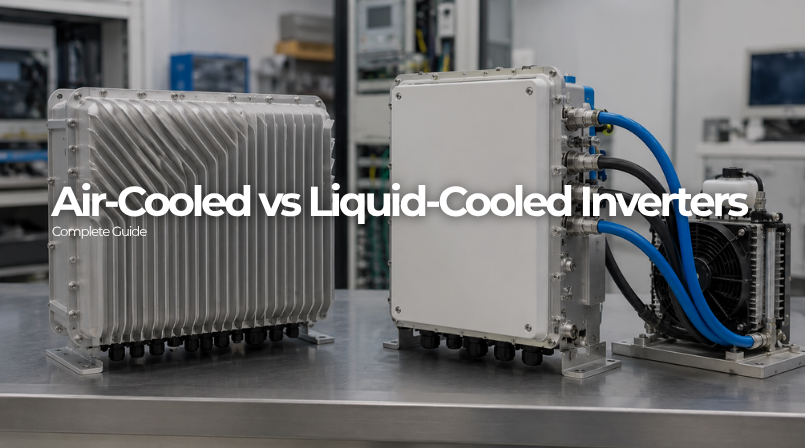
Cooling method is one of those specs buyers skim past on a datasheet, right up until it's the reason an inverter is derating on the hottest day of the year or needing an unplanned service call. Air-cooled and liquid-cooled are the two real approaches used across the inverter market, and they solve the same heat problem in genuinely different ways.
How Air-Cooled Inverters Work
Air-cooled inverters dissipate heat using either natural convection (passive heatsinks with no moving parts) or forced-air cooling (fans actively moving air across internal components). Both rely on ambient air as the cooling medium, no separate fluid loop, no pump, no coolant to maintain. This is the dominant approach across the solar inverter industry, from small residential string inverters through most C&I and utility-scale units.
How Liquid-Cooled Inverters Work
Liquid-cooled systems circulate a coolant, typically a water-glycol mixture, through channels or plates in direct contact with heat-generating components, then move that heat to an external radiator or heat exchanger. This can manage significantly higher heat density in a smaller footprint than air cooling alone, which is why it shows up in some very high-power central inverters, EV charging infrastructure, and other power electronics where component density is extreme. It's a less common approach in mainstream string inverters, since it introduces real added complexity for a benefit that most string inverter designs don't actually need.
Air-Cooled vs Liquid-Cooled: The Real Trade-offs
Parameters | Air-Cooled | Liquid-Cooled |
|---|---|---|
Mechanical complexity | Lower, fewer or no moving parts (fan less) or a simple fan | Higher, pump, coolant loop, and heat exchanger involved |
Failure points | Fan wear (if present) is the main mechanical risk | Pump failure and coolant leaks add real additional risk |
Maintenance | Minimal, especially with fanless design | Requires coolant-level checks and periodic fluid maintenance |
Cooling capacity per footprint | Lower than liquid cooling at extreme power density | Higher, can manage more heat in a smaller physical space |
Typical use case | Residential through most C&I and utility-scale string inverters | Very high-power central inverters, specialized power electronics |
Long-term reliability in field conditions | Generally strong, especially with fanless or well-engineered forced-air design | Depends heavily on coolant system maintenance discipline |
Why Air-Cooled Dominates Most Solar Applications
The extra cooling capacity liquid systems offer only matters once heat density gets extreme, which most solar string inverters, even large C&I and utility-scale units, simply don't reach with well-engineered heatsink and enclosure design. Meanwhile, a coolant loop introduces two things solar sites generally want to avoid: a pump that can fail, and a fluid system that can leak. For equipment expected to run largely unattended for 25 years, air cooling's simplicity is usually the more reliable choice, not the compromise option.
Solis's Air-Cooled Approach
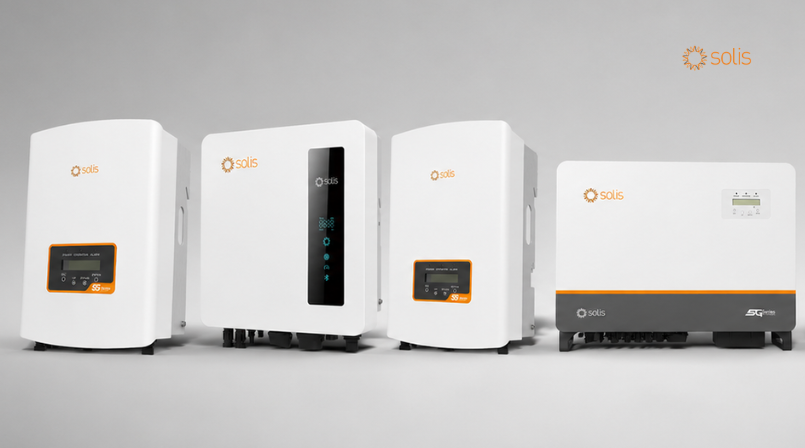
Solis's entire inverter range is built on air cooling. Residential units use a fanless, natural convection design, engineered heatsinks handle heat dissipation with no moving parts at all, removing a common mechanical wear point outright. At C&I and utility scale, where higher power density means more total heat, Solis inverters use robust heatsink and enclosure engineering suited to that class of unit, still air-based, without the added complexity and failure points a liquid-cooling system would introduce. Combined with automatic thermal derating as a safeguard, this approach favors long-term field reliability over squeezing maximum power density into a minimal footprint.
Choosing the Right Approach for Your Project
For the overwhelming majority of residential, commercial, and industrial solar projects, air-cooled inverters are the right specification, lower maintenance burden, fewer failure points, and a design proven across decades of field deployment. Liquid cooling earns its place only in genuinely extreme power-density applications, which is not where most solar projects, even large ones, actually sit.
Explore the Solis Range
Explore the Solis on-grid inverter range for straightforward grid-tied systems, or the Solis hybrid inverter range for projects needing battery backup. For the complete equipment portfolio, browse the full products page.
Sourcing Solis Inverters in India
OSG Oriana India Pvt Ltd is the authorized PAN India distributor for Solis, supplying the full air-cooled inverter range with genuine manufacturer warranty support nationwide.
Summary
Air-cooled and liquid-cooled inverters solve the same heat management problem with very different trade-offs, air cooling wins on simplicity, reliability, and low maintenance; liquid cooling wins only at extreme power densities most solar projects never reach. Solis's fanless residential design and engineered air cooling at larger scale reflect a deliberate bet on long-term field reliability over raw cooling capacity most projects don't actually need.
Want help specifying the right Solis inverter for your project? Get in touch with OSG Oriana's team.
FAQs
1. Are Solis inverters air-cooled or liquid-cooled?
Air-cooled across the entire range, fanless natural convection on residential units, and engineered air-based thermal management at C&I and utility scale.
2. Is liquid cooling better than air cooling for solar inverters?
Not for most applications. Liquid cooling manages more heat in a smaller footprint but adds pump and coolant-related failure points; air cooling is simpler and generally more reliable for the power densities most solar inverters operate at.
3. Why don't more inverters use liquid cooling?
Most solar inverter designs, including large C&I and utility-scale string units, don't reach the extreme heat density where liquid cooling's added complexity is actually justified.
4. Does fanless cooling limit an inverter's capacity?
It's typically used on smaller residential units where heat load is manageable through heatsink design alone; larger units use engineered air cooling suited to their higher output.
5. What maintenance does an air-cooled inverter need?
Minimal. Fanless designs need essentially none beyond routine cleaning; forced-air designs benefit from periodic vent and fan inspection.
Found this useful? Share it with your network.