Solar Project
Commercial Solar Project Planning Guide
On this page
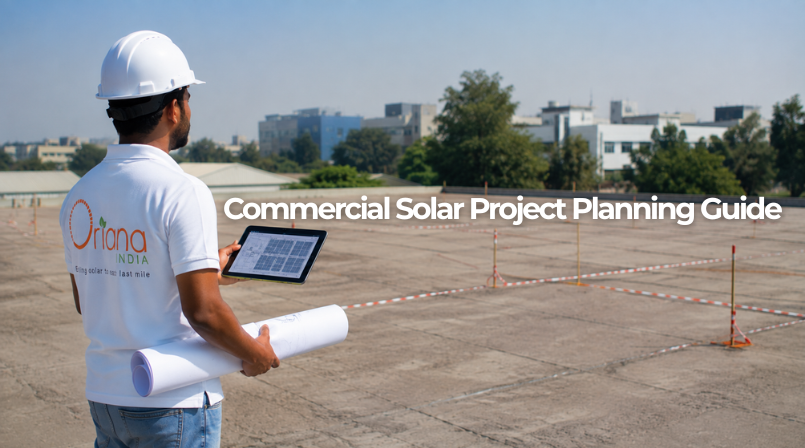
A commercial solar project succeeds or struggles based on decisions made before installation ever begins, site assessment, equipment selection, and budgeting, not on how well the panels get bolted down. This guide walks through the planning steps that actually determine whether a commercial project hits its projected returns.
Step 1: Assess Your Site and Load Profile
Start with your actual electricity consumption pattern, not a rough estimate. Pull at least 12 months of billing data to capture seasonal variation, and note when your peak load actually occurs, many commercial sites draw more power in the afternoon than midday, which affects how much a solar system can realistically offset without battery storage.
Roof or land assessment matters just as much: available area, structural load capacity, orientation, and shading from nearby structures all shape maximum system size before you even get to equipment selection.
Step 2: Choose the Right Panels
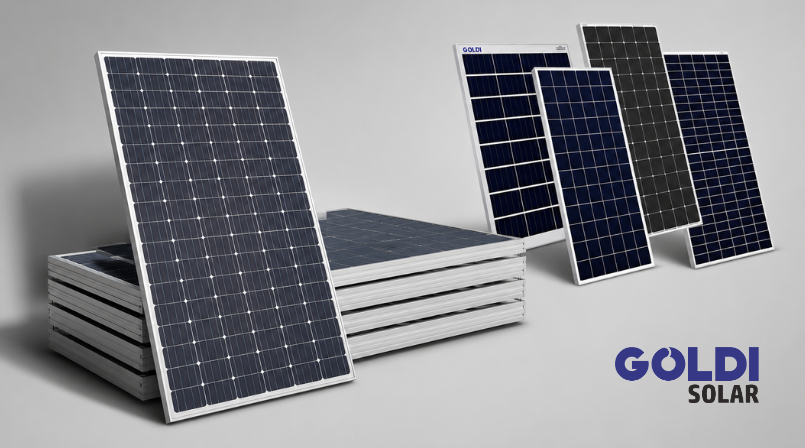
Panel selection affects both upfront cost and long-term generation, and the choice isn't just about wattage, efficiency, temperature coefficient, and degradation rate all affect real-world output over 25 years, especially on Indian rooftops that see sustained high temperatures.
Explore Goldi Solar panels for a commercial-grade module range built for exactly this kind of project, or browse the full solar modules range to compare specifications across available options.
Step 3: Choose the Right Inverter
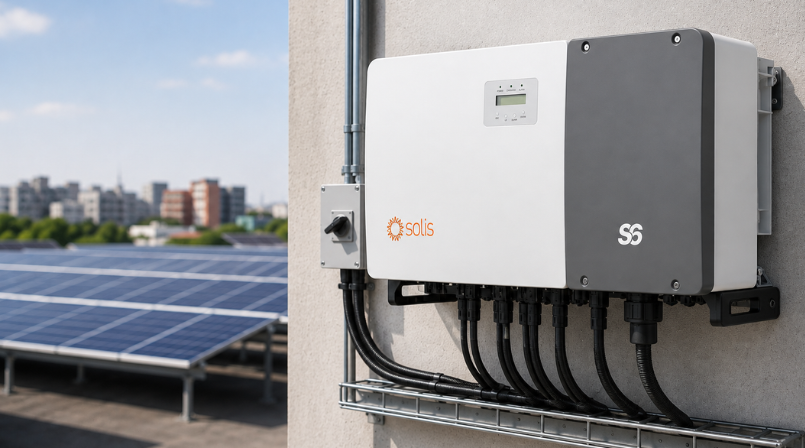
Inverter selection depends on project scale and whether backup power is a requirement, not brand preference alone. A straightforward on-grid system suits most commercial sites focused purely on offsetting daytime consumption; a hybrid system with battery backup makes sense where outages are frequent or specific loads can't tolerate downtime.
Explore Solis inverters for a broad on-grid and hybrid range spanning residential through utility scale, or explore Sineng inverters for high-power string inverters engineered for larger commercial and industrial installations.
Step 4: Plan Installation and Compliance
Commercial projects typically involve more regulatory steps than residential ones: DISCOM interconnection approval, net metering or open access applications depending on project type, and compliance with any applicable ALMM (Approved List of Models and Manufacturers) requirements for your equipment. Build realistic timelines around these approvals into your project schedule, they're a common source of delay that has nothing to do with actual installation work.
Structural and electrical safety planning matters too: proper grounding, surge protection, and, for larger rooftop or ground-mount sites, safe walkway access for installation and future maintenance crews.
Step 5: Budget Realistically
A commercial solar budget needs to account for more than equipment cost:
Equipment: panels, inverters, mounting structure, cabling, and protection equipment
Installation labor, which scales with site complexity, not just system size
Regulatory and interconnection costs, including any application fees or required studies
Contingency, typically 5-10% for unexpected site conditions or scope changes
Financing costs, if the project isn't fully self-funded
Get itemized quotes rather than a single bundled number, it's the only way to actually compare two proposals on equal terms.
Step 6: Plan for Operations and Maintenance
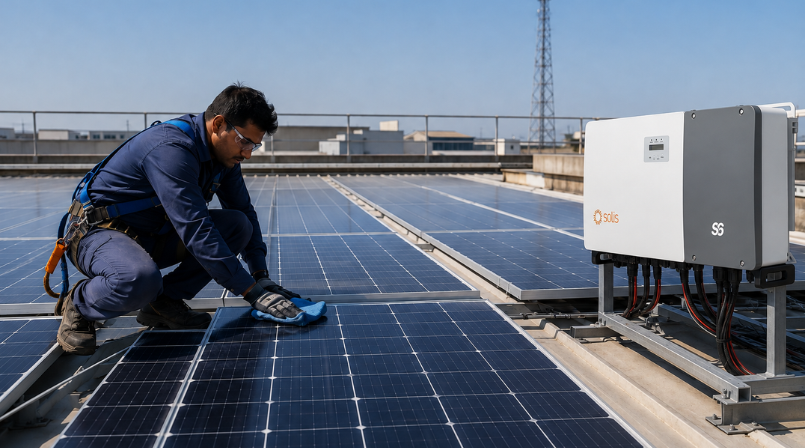
A commercial system needs an O&M plan before commissioning, not after something goes wrong. That includes a cleaning schedule matched to local soiling conditions, a monitoring setup that surfaces performance issues early, and a clear point of contact for warranty claims. Skipping this planning step is one of the most common reasons commercial systems underperform their projected output over time.
Sourcing Equipment for Your Project
OSG Oriana India Pvt Ltd distributes Goldi Solar modules, Solis and Sineng inverters, APAR cables, and FiberX FRP walkway systems across a PAN India network, giving commercial project developers a single source for a complete BOQ rather than coordinating multiple vendors.
Summary
A commercial solar project's success is largely determined before installation starts: an accurate load assessment, the right panel and inverter selection for your specific site and scale, realistic regulatory timelines, and a proper budget that accounts for more than just equipment. Planning O&M from day one, rather than as an afterthought, is what actually protects the project's long-term returns.
Planning a commercial solar project? Get in touch with OSG Oriana's team for equipment sourcing and project support.
FAQs
1. What's the first step in planning a commercial solar project?
Assessing your actual electricity consumption pattern using at least 12 months of billing data, along with your site's roof or land area, structural capacity, and shading conditions.
2. Should a commercial project choose on-grid or hybrid inverters
It depends on whether backup power or tariff management matters for the site. Straightforward daytime offset suits on-grid; sites with frequent outages or critical loads should consider hybrid.
3. What regulatory steps does a commercial project need to plan for?
DISCOM interconnection approval, net metering or open access applications, and compliance with applicable ALMM requirements, all of which can add real time to a project schedule.
4. What should a commercial solar budget include beyond equipment?
Installation labor, regulatory and interconnection costs, a contingency allowance, and financing costs if applicable, not just panel and inverter pricing.
5. Where can I source equipment for a commercial solar project?
OSG Oriana India Pvt Ltd distributes Goldi Solar and LONGi modules alongside Solis and Sineng inverters across a PAN India network.
Found this useful? Share it with your network.