hybrid inverter
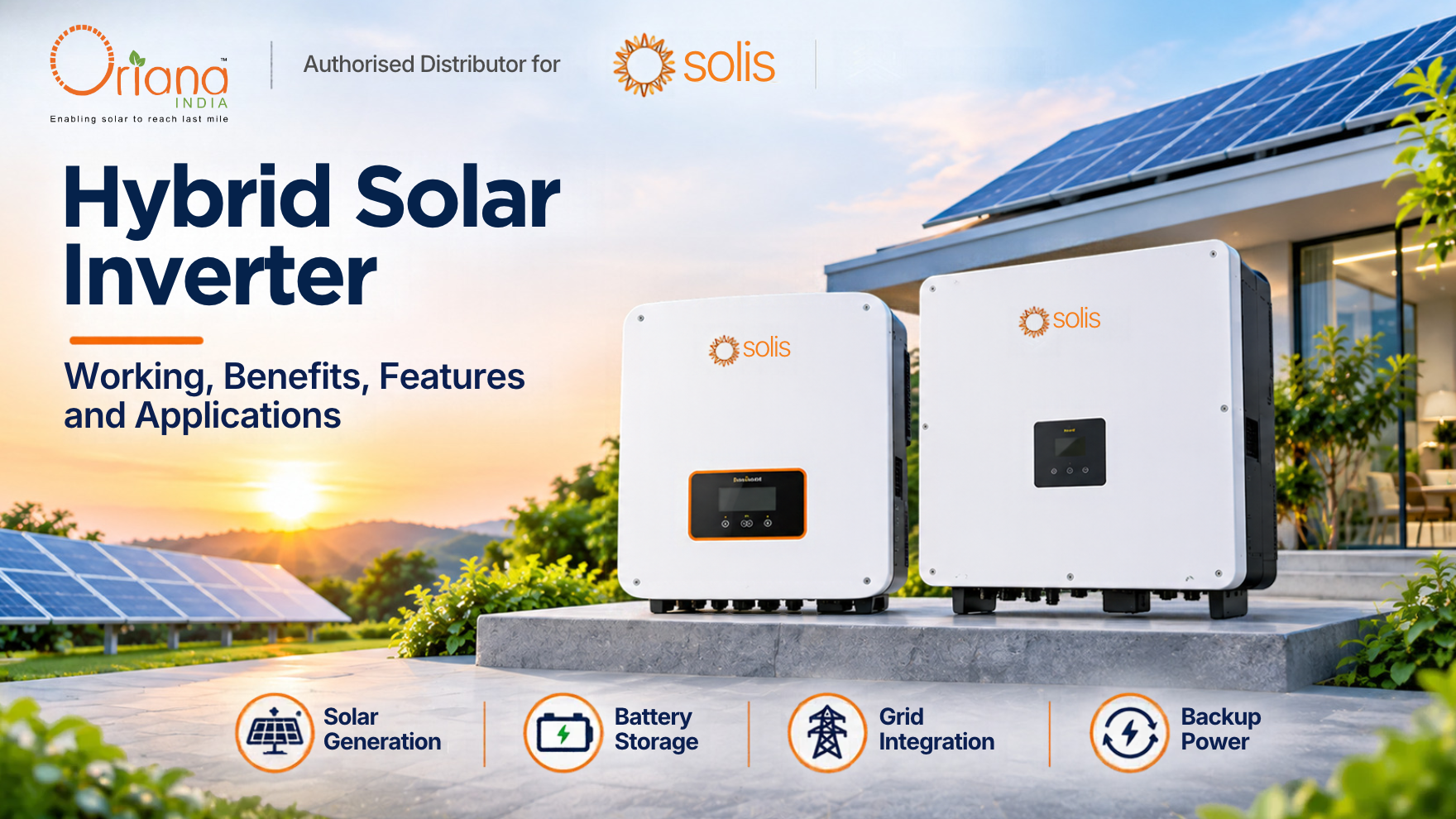
Hybrid Solar Inverter: Working, Benefits, Features and Applications
Introduction
Solar energy is becoming an important solution for residential, commercial and industrial electricity requirements in India. As solar adoption increases, many consumers and businesses are also exploring ways to store solar energy and manage electricity consumption more efficiently.
This is where a hybrid solar inverter becomes useful.
Unlike a conventional grid-connected solar inverter, a hybrid inverter is designed to work with solar panels, compatible battery storage and, depending on its configuration, the electricity grid.
It can help manage energy from multiple sources and provide greater flexibility in how solar electricity is used.
But how does a hybrid solar inverter work? What are its benefits, and where can it be used?
Let's understand its technology, features and applications.
1. What Is a Hybrid Solar Inverter?
A hybrid solar inverter is an inverter designed to manage electricity from solar panels, compatible battery storage and the utility grid.
It converts DC electricity generated by solar panels into AC electricity for connected loads. It can also manage battery charging and discharging according to the inverter's supported operating modes and system configuration.
A hybrid solar system may use solar energy directly, store excess energy in batteries or draw electricity from the grid when required.
The exact operating capabilities depend on the inverter model, battery compatibility and system design.
2. How Does a Hybrid Solar Inverter Work?
A hybrid solar inverter manages different energy sources within a solar power system.
The general working process is:
Step 1: Solar Energy Generation
Solar panels receive sunlight and generate DC electricity.
Step 2: Power Conversion
The hybrid inverter converts solar DC power into AC electricity for connected electrical loads.
Step 3: Battery Charging
When the system has surplus solar energy and the configured operating conditions allow it, the inverter can charge a compatible battery.
Step 4: Battery Discharging
When solar generation is insufficient, stored battery energy may be used to supply connected loads, depending on the system settings.
Step 5: Grid Interaction
If solar and battery power are insufficient, the system may draw electricity from the grid. Grid charging and power export capabilities depend on the inverter model and applicable regulations.
This energy management capability gives hybrid systems flexibility for different electricity requirements.
3. Key Features of a Hybrid Solar Inverter
The features of a hybrid inverter vary between manufacturers and models. Common capabilities may include:
Solar and Battery Integration
Hybrid inverters are designed to work with compatible solar panels and battery systems.
Intelligent Energy Management
Some models offer configurable operating modes to manage solar generation, battery charging, grid supply and connected loads.
Backup Power Support
Selected hybrid inverters can provide backup power during grid outages through a supported backup output or external changeover arrangement.
Monitoring and Communication
Depending on the model, users may be able to monitor energy generation, battery status and system performance through a display, monitoring platform or communication interface.
Flexible Operating Modes
Certain models support different operating modes depending on energy requirements, battery availability and grid conditions.
Important: Always check the manufacturer's datasheet to verify which features are available on a particular model.
4. Benefits of a Hybrid Solar Inverter
1. Better Use of Solar Energy
A hybrid system can store surplus solar energy in a compatible battery instead of relying only on immediate solar consumption or grid export.
2. Battery Storage Integration
It allows solar generation and battery storage to operate as part of an integrated energy system.
3. Backup Power Capability
When the selected inverter supports backup operation and the system is correctly configured, stored energy can help supply designated loads during a grid outage.
4. Flexible Energy Management
Users may be able to configure how solar, battery and grid electricity are used according to their requirements.
5. Suitable for Different Applications
Hybrid inverter systems can be designed for residential, commercial and selected industrial applications, depending on capacity and product capabilities.
5. Hybrid Solar Inverter vs On-Grid Solar Inverter
Both hybrid and on-grid inverters are used in grid-connected solar installations, but their battery capabilities and energy management options can differ.
Parameter | On-Grid Inverter | Hybrid Inverter |
|---|---|---|
Grid connection | Yes | Supported, depending on model |
Solar power conversion | Yes | Yes |
Battery integration | Not inherent | Supported with compatible batteries |
Backup operation | Not normally available in standard systems | Available on supported configurations |
Energy management | Primarily solar and grid interaction | Solar, battery and grid management |
System complexity | Generally simpler | Depends on battery and backup design |
The right choice depends on the project's energy requirements, backup expectations, budget and operating conditions.
6. Applications of Hybrid Solar Inverters in India
Residential Solar Systems
Homeowners may consider hybrid systems when they want to combine rooftop solar with battery storage and backup capability.
Commercial Buildings
Offices, retail spaces and commercial facilities may use hybrid systems to manage solar generation and compatible battery storage.
Small and Medium Businesses
Businesses with specific backup or energy-management requirements may evaluate hybrid inverter solutions according to their load profile.
Remote and Weak-Grid Locations
Hybrid systems may be useful where grid reliability is limited, provided the system is designed for the required operating conditions.
Selected Industrial Applications
Industrial facilities may evaluate larger hybrid or integrated energy-storage solutions where technical requirements, available products and project economics support their use.
7. How to Choose the Right Hybrid Solar Inverter
Selecting a hybrid inverter requires more than checking its rated capacity.
Consider these factors before making a decision.
1. Power Capacity
Determine the connected load, expected demand and required inverter output capacity.
2. Battery Compatibility
Check the supported battery chemistry, voltage range, communication requirements and approved battery models.
3. Solar PV Input Specifications
Review maximum DC voltage, MPPT voltage range, input current limits and supported PV array capacity.
4. Backup Output
If backup is required, verify the supported backup output, changeover arrangement, load limits and surge capability.
5. Monitoring Features
Check whether the inverter supports local or remote monitoring and which communication methods are available.
6. Efficiency
Compare the manufacturer's stated efficiency values and understand the conditions under which they are measured.
7. Warranty and Technical Support
Review warranty terms, installation requirements, service availability and technical documentation.
8. What Is a 5kW Hybrid Solar Inverter?
A 5kW hybrid solar inverter is designed around a nominal AC output rating of approximately 5kW, subject to the manufacturer's specifications.
It may be considered for residential or small-scale applications depending on connected loads, solar array capacity and battery requirements.
Before selecting a 5kW hybrid inverter, check:
Rated AC output power.
Maximum solar PV input capacity.
MPPT voltage range.
Maximum DC input current.
Supported battery voltage and capacity.
Backup output rating.
Single-phase or three-phase compatibility.
Warranty and monitoring features.
A 5kW rating alone does not determine how many appliances can operate during a power cut. Actual backup capability depends on the inverter's output limits, battery capacity, surge requirements and connected loads.
9. Is a Hybrid Solar Inverter Worth Considering?
A hybrid solar inverter may be worth considering when battery storage, backup power or flexible energy management is an important project requirement.
However, it may not be the right solution for every solar installation.
A conventional on-grid system may be more suitable when the primary objective is grid-connected solar generation without battery storage.
The decision should be based on:
Electricity consumption patterns.
Grid availability.
Backup power requirements.
Battery investment.
Available installation space.
System operating costs.
Applicable electricity regulations.
A proper assessment of the project's energy requirements can help determine the most suitable inverter configuration.
Conclusion
A hybrid solar inverter combines solar power conversion with compatible battery storage and grid interaction, offering flexibility for different energy requirements.
From residential rooftop installations to selected commercial and business applications, hybrid systems can support solar energy utilisation, battery integration and backup operation when appropriately designed.
Before selecting a hybrid inverter, evaluate its technical specifications, battery compatibility, backup capability, warranty and monitoring features.
OSG Oriana India provides solar product solutions for the Indian solar market. Explore our product range and connect with our team to discuss your solar project requirements.
Contact Us
Toll Free
FAQs
What is a hybrid solar inverter?
A hybrid solar inverter is designed to manage electricity from solar panels, compatible battery storage and the utility grid.
How does a hybrid solar inverter work?
It converts solar DC electricity into AC power, manages battery charging and discharging where supported, and interacts with the grid according to its operating configuration.
Can a hybrid solar inverter work without a battery?
Some hybrid inverter models support operation without a battery, while others have specific battery requirements. Check the manufacturer's documentation.
Does a hybrid solar inverter provide backup during a power cut?
Selected hybrid inverters support backup operation, but the feature depends on the model, battery availability and correct system configuration.
What is a 5kW hybrid solar inverter?
It is a hybrid inverter with a nominal AC output rating of approximately 5kW, subject to the manufacturer's specifications.
What is the difference between a hybrid and an on-grid solar inverter?
A hybrid inverter supports compatible battery integration and may provide backup operation. A standard on-grid inverter primarily operates with the electricity grid and generally shuts down during grid outages.
How do I select the right hybrid solar inverter?
Evaluate power capacity, solar PV input specifications, battery compatibility, backup output, monitoring, efficiency, warranty and project requirements.
Found this useful? Share it with your network.