Solis Inverters
Solar Inverter Cooling Methods: How Solis Inverters Manage Heat
On this page
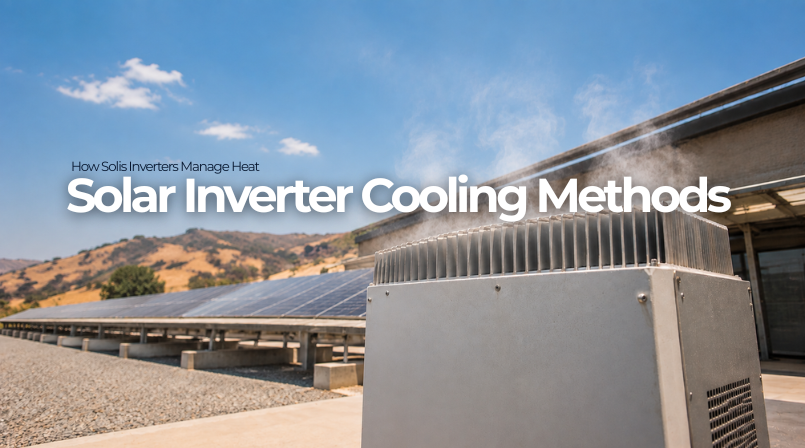
Solis is the brand name behind inverters manufactured by Ginlong Technologies, a company founded in 2005 and publicly listed on the Shenzhen Stock Exchange since 2019. Over two decades, Ginlong has grown into one of the largest string inverter manufacturers in the world, with Solis products now installed across residential rooftops, commercial and industrial sites, and utility-scale plants in more than 100 countries. That scale matters for a topic like cooling, since it's one of the areas where sustained R&D investment, rather than a single product tweak, actually shows up in real-world reliability.
Why Cooling Design Actually Matters
Heat is the single biggest driver of inverter wear and failure over a system's life. Every inverter generates heat while converting DC power to AC, and how that heat is managed, or isn't, directly affects component lifespan, efficiency, and how often a unit needs service. In a country where ambient rooftop temperatures regularly exceed 40°C in summer, cooling design isn't a minor spec on a datasheet, it's one of the features that actually separates a reliable inverter from one that quietly derates or fails early.
Common Solar Inverter Cooling Methods
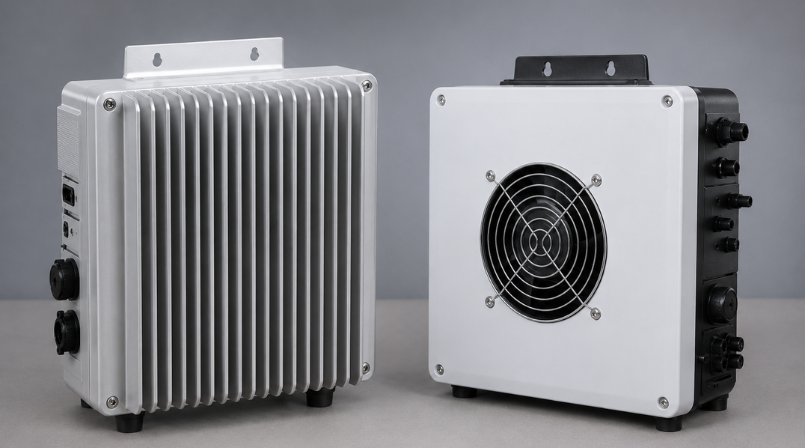
Natural convection (fanless) cooling relies entirely on heatsink design and passive airflow to dissipate heat, no moving parts, no fan to wear out or fail, and typically quieter and lower-maintenance as a result. It works best on smaller units where total heat generation is manageable through good heatsink engineering alone.
Forced-air cooling uses fans to actively move air across internal components, which handles higher heat loads than natural convection but introduces a mechanical part that can wear out, and a failing fan directly causes the exact thermal stress problem cooling is meant to prevent.
Smart or variable-speed cooling adjusts fan operation based on real-time internal temperature rather than running at a fixed speed, balancing cooling performance against component wear and noise more intelligently than a simple always-on fan.
How Solis Inverters Approach Cooling
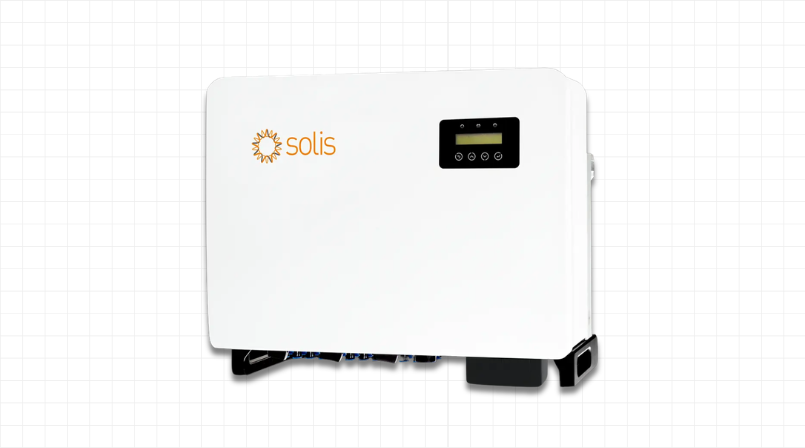
Solis's residential inverter range uses a fanless, natural convection design, engineered heatsinks dissipate heat passively rather than relying on a fan. This removes one of the most common mechanical failure points in inverter design entirely, rather than managing around it, and keeps residential units quiet enough to mount close to living spaces without noise complaints.
At C&I and utility scale, where units handle significantly higher power density and correspondingly more heat, Solis's larger inverters are engineered with thermal management appropriate to that class of unit, robust heatsink design paired with the ventilation and enclosure engineering needed to keep internal temperatures within safe operating range across sustained high-output periods. Across the range, Solis also builds in thermal protection and automatic derating as a safeguard, reducing output before internal temperatures reach unsafe levels rather than risking component damage.
Why This Matters for Indian Installations Specifically
India's climate puts real pressure on inverter cooling design that milder climates don't. Sustained summer heat, dust exposure in drier regions, and monsoon humidity all interact with an inverter's thermal management in ways that show up as real reliability differences between brands over a 25-year system life, not just in a lab test. A fanless residential design that eliminates a wear-prone moving part, combined with IP66 protection against dust and moisture ingress, is a genuinely practical combination for Indian rooftop conditions rather than a marketing checkbox.
Explore the Solis Range
You can review the full lineup and specifications on the Solis on-grid inverter page and the Solis hybrid inverter page. Our complete guide to the Solis inverter range covers how these design choices are distributed across the residential, C&I, hybrid, and utility-scale product families.
Sourcing Solis Inverters in India
OSG Oriana India Pvt Ltd is the authorized PAN India distributor for Solis, supplying the full range with genuine manufacturer warranty support to installers, EPCs, and project developers nationwide.
Summary
Cooling design is one of the quieter engineering decisions behind an inverter, but it's directly tied to how long the unit actually lasts in real Indian operating conditions. Solis's fanless residential design removes a common wear point outright, while its larger C&I and utility-scale units are engineered for the higher thermal loads that come with greater power density, backed by the R&D scale of a manufacturer that's been building inverters for two decades.
Want help specifying the right Solis inverter for your climate and site conditions? Get in touch with OSG Oriana's team, or browse the full Solis inverter range.
FAQs
1. Do Solis residential inverters have cooling fans?
No. Solis's residential range uses a fanless, natural convection design, relying on engineered heatsinks rather than a mechanical fan.
2. Why does fanless cooling matter?
It removes one of the most common mechanical wear-and-failure points in inverter design, and keeps the unit quiet enough for close-proximity mounting.
3. How do larger Solis inverters manage higher heat loads?
C&I and utility-scale units are engineered with thermal management suited to their higher power density, including robust heatsink and enclosure design, alongside automatic thermal derating as a safeguard.
4. Does India's climate affect inverter cooling needs?
Yes, significantly. Sustained high summer temperatures and dust exposure make cooling design and IP-rated protection more important for Indian installations than in milder climates.
5. Who manufactures Solis inverters?
Ginlong Technologies, founded in 2005 and publicly listed on the Shenzhen Stock Exchange since 2019.
Found this useful? Share it with your network.