Solar Inverters
Solar Inverter Performance Issues: Causes, Diagnosis, and Fixes
On this page
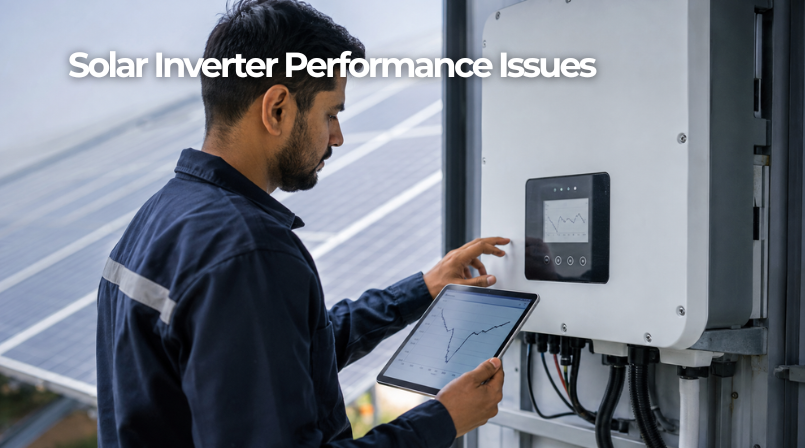
A solar system that's generating less than it should rarely announces the problem clearly. Panels keep looking fine, the sun's still out, but your monitoring data quietly shows less energy than it used to. More often than not, the inverter is where that gap starts. This guide covers the most common solar inverter performance issues, how to actually diagnose them, and how Solis and Sineng inverters are engineered to reduce how often they happen in the first place.
Common Solar Inverter Performance Issues
Gradual efficiency decline no fault code, no alarm, just a slow drop in how much DC input actually converts to usable AC output over time
MPPT tracking problems when maximum power point tracking isn't working precisely, the inverter fails to pull the optimal power from each string, especially under partial shading or mismatched panel orientations
Thermal derating inverters reduce output automatically once internal temperatures climb too high, a genuine protective feature, but one that quietly caps generation during the hottest part of the day if cooling design or site ventilation is inadequate
Communication and monitoring dropouts the inverter may be performing fine, but if monitoring data stops reporting, you lose the visibility needed to catch a real problem early
String imbalance one underperforming string (due to shading, soiling, or a wiring issue) drags down the reading for its entire MPPT channel if the inverter's design doesn't isolate strings finely enough
Nuisance grid-fault trips an inverter that disconnects too readily on minor grid fluctuations loses generation time even when there's no real safety issue
Fan and cooling system wear on inverters with active cooling, a failing or dust-clogged fan directly causes the thermal derating problem above
Diagnosing the Issue Before Assuming Hardware Failure
Not every performance dip means the inverter itself has failed. Before assuming the worst:
Check monitoring data against expected generation for the season and weather, not just against last month, since seasonal sun angle changes are often mistaken for equipment problems
Look for asymmetry across strings or MPPT channels, since a uniform drop across the whole system points to a different cause than one underperforming section
Check for error codes or fault history in the monitoring app, most modern inverters log this even for issues that resolved on their own
Rule out simple causes first panel soiling, new shading from tree growth or a nearby structure, or a loose connection are all more common than an actual inverter fault
How Solis Inverters Address These Issues
Solis's design choices target several of these problems directly rather than leaving them to chance:
SolisCloud remote monitoring surfaces performance drops and fault alerts in real time, rather than waiting for a scheduled inspection to notice something's off
Multiple MPPT inputs on residential and C&I models track strings more granularly, reducing how much one shaded or mismatched string drags down overall output
IP66 protection on current models limits dust and moisture ingress, a common root cause of both thermal issues and premature component wear
Anti-PID technology protects connected panels from potential-induced degradation, addressing a performance loss that originates at the panel level but shows up as an inverter-side generation shortfall
You can review the full specifications on the Solis on-grid inverter page and the Solis hybrid inverter page.
How Sineng Inverters Address These Issues
Sineng's utility-scale string inverters, including the SP-350K-INHB, are engineered specifically around thermal and dust-related performance risks at large scale:
Smart forced-air cooling with low temperature rise actively manages internal temperature to reduce thermal derating during sustained high-output operation
Intelligent fan reversal technology periodically reverses airflow to clear dust build-up from cooling components, directly targeting one of the most common causes of gradual cooling system degradation on exposed ground-mount sites
DC terminal temperature detection with an integrated smart DC switch catches developing connection issues, a common source of localized heating and potential fault, before they escalate
Up to 99% max efficiency and 98.8% Euro efficiency, with 6 MPPTs supporting up to 30 PV strings, giving finer tracking granularity across large arrays
You can review the full specifications on the Sineng on-grid inverter page, including the SP-350K-INHB.
Preventing Performance Issues Before They Start
Most of what's covered here is exactly what routine maintenance is designed to catch early, dust build-up, connection wear, and cooling system degradation rarely appear overnight. Our solar inverter maintenance guide covers the full inspection and servicing checklist, and our solar inverter safety guide covers the electrical safety practices that go alongside it.
Summary
Most solar inverter performance issues trace back to a handful of root causes: thermal stress, dust and moisture ingress, MPPT tracking limitations, and connection wear. Both Solis and Sineng build specific engineering responses to these into their inverter lines, granular MPPT tracking, remote monitoring, and active thermal and dust management, which is exactly why equipment choice matters as much as maintenance discipline in keeping a system performing the way it was designed to.
Seeing a performance drop you can't explain? Get in touch with OSG Oriana's team for support with either brand.
FAQs
1. Why is my solar inverter generating less power than before?
Common causes include thermal derating, MPPT tracking issues, panel soiling or new shading, string imbalance, or dust and connection wear inside the unit. Check monitoring data against seasonal expectations first.
2. Does thermal derating mean my inverter is broken?
Not necessarily. Derating is a protective feature that reduces output at high internal temperatures. Frequent or severe derating, though, can point to a cooling or ventilation problem worth investigating.
3. How does SolisCloud help identify performance issues?
It provides real-time generation data and fault alerts, letting you spot a developing problem well before it would show up during a scheduled manual inspection.
4. What makes Sineng's SP-350K-INHB suited to utility-scale performance challenges?
Its smart forced-air cooling, intelligent fan reversal for dust management, and DC terminal temperature detection are specifically engineered to reduce thermal and dust-related performance loss on large, exposed sites.
5. When should I contact my distributor about a performance issue?
When a sustained, unexplained generation drop or recurring fault codes appear, especially if the unit may still be under manufacturer warranty.
Found this useful? Share it with your network.