Solar Inverters
Solar Inverter Warranty Explained
On this page
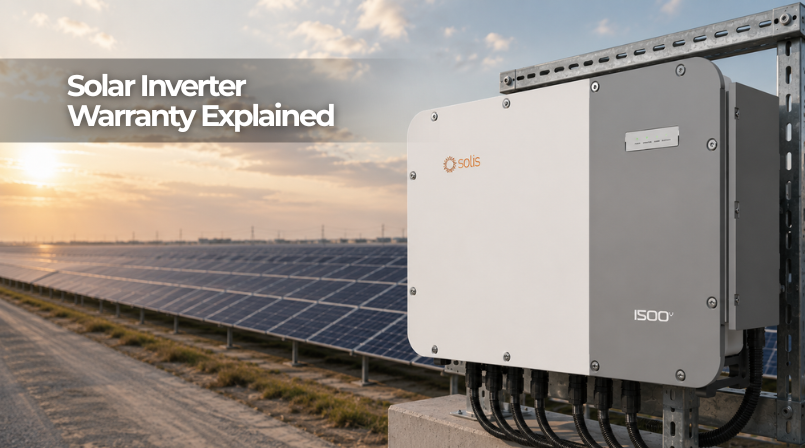
A 25-year solar system is only as good as the warranty behind its weakest link, and that's almost always the inverter, the one component with active electronics in a system otherwise built from largely passive parts. Understanding what your warranty actually covers, what voids it, and how to claim against it matters more than most buyers realize until something goes wrong. This guide breaks all of that down.
What a Solar Inverter Warranty Actually Covers
Most manufacturer warranties cover manufacturing defects and component failure under normal operating conditions, but the details vary by brand and product line:
Parts and repair/replacement a failed unit is repaired or replaced, though some warranties cover parts only, with labor billed separately
Performance guarantees some manufacturers guarantee the inverter will operate at a minimum efficiency threshold for the warranty period, not just that it will function at all
Standard vs extended terms a base warranty (commonly 5-10 years across the industry) can usually be extended for a fee, often to 15 or even 20 years on residential units
Standard vs Extended Warranty Terms
The standard warranty is built into the unit's base price and typically reflects the manufacturer's confidence in the product's expected working life. Extending it costs more upfront but can be worth it, especially since inverters are more likely to need attention in years 10-20 of a system's life than in the first decade. Whether extending makes financial sense depends on:
How the extension is priced relative to the cost of a full replacement unit later
Whether your system is residential or C&I/utility-scale, since downtime costs scale very differently
How accessible authorized service is in your area if a claim needs to be made years down the line
What Voids a Solar Inverter Warranty
This is the part most buyers skip reading until it's too late. Common exclusions across the industry include:
Unauthorized repairs opening the unit or having non-certified personnel attempt a repair typically voids coverage immediately
Improper installation installation that doesn't follow the manufacturer's specifications, including incorrect grounding or mounting, can void a claim
Grey-market or unauthorized purchase buying through a channel that isn't an authorized distributor is one of the most common reasons a warranty claim gets rejected, even if the unit itself is genuine
Environmental damage from improper siting installing a unit in conditions outside its rated protection level (e.g., direct water exposure beyond its IP rating) can void coverage
Neglected maintenance most warranties assume basic upkeep was performed; our solar inverter maintenance guide covers what that actually involves in practice
How to Make a Warranty Claim
Document the issue error codes, monitoring app screenshots, and a clear description of when the problem started
Contact your authorized distributor or installer first, not the manufacturer directly, in most cases, unless your purchase channel specifies otherwise
Provide proof of purchase and installation date, since warranty periods run from one of these two points depending on the manufacturer's terms
Confirm the claim is being processed against the actual manufacturer warranty, not a separate installer or reseller guarantee with different terms
Warranty Terms Across Solis's Range
Solis residential inverters up to 20kW typically carry a standard 10-year warranty, extendable to 15 or 20 years. C&I and utility-scale units carry their own specific terms that should be confirmed per model at the time of purchase, since warranty length and coverage scope can differ from the residential line. Our complete guide to the Solis inverter range covers how warranty terms map across the residential, C&I, hybrid, and utility-scale product families.
You can review specific warranty terms directly on the product pages for the Solis on-grid inverter range and the Solis hybrid inverter range.
Why Buying from an Authorized Distributor Matters
A genuine unit bought through an unauthorized channel can still have its warranty rejected, since manufacturers typically require proof of purchase through an approved distribution chain to honor a claim. This is less about the product itself and more about ensuring the sale, installation, and service history can actually be traced back to a source the manufacturer recognizes.
Related Reading
Warranty, maintenance, and safety aren't separate topics, they're connected. Neglected maintenance can void a warranty claim, and unsafe installation practices can do the same. For the full picture:
Solar Inverter Maintenance Guide the checklist and service schedule that keeps your warranty valid
Solar Inverter Safety Guide the electrical and installation practices that protect both your system and your coverage
Support from OSG Oriana India
OSG Oriana India Pvt Ltd is the authorized PAN India distributor for Solis, which means every unit sold through us carries a traceable, manufacturer-recognized purchase history, exactly what a warranty claim depends on. We can guide installers, EPCs, and system owners through the claims process directly rather than leaving it to guesswork.
Summary
A solar inverter warranty is only as good as the conditions attached to it, buy through an authorized channel, maintain the system as specified, and follow proper installation practices, and the warranty does what it's supposed to. Skip any of those, and even a genuine, high-quality unit can leave you without coverage exactly when you need it.
Have questions about warranty terms on a Solis inverter? Get in touch with OSG Oriana's team.
FAQs
1. How long is a typical solar inverter warranty?
Commonly 5-10 years as standard across the industry, with Solis residential units up to 20kW carrying a standard 10-year term, extendable to 15 or 20 years.
2. What voids a solar inverter warranty?
Unauthorized repairs, improper installation, purchase through an unauthorized (grey-market) channel, environmental damage from improper siting, and neglected maintenance are the most common reasons.
3. Does buying a genuine product guarantee the warranty will be honored?
Not on its own. The purchase also needs to be traceable through an authorized distribution channel, since manufacturers typically require this to process a claim.
4. Who do I contact to make a warranty claim?
Your authorized distributor or installer first, in most cases, rather than the manufacturer directly, unless your specific purchase terms say otherwise.
5. Are C&I and utility-scale warranty terms the same as residential?
Not necessarily. Terms can differ by product line, so confirm the specific warranty scope for your model at the time of purchase.
Found this useful? Share it with your network.