Solar Knowledge & Insights
Solar Plant Design Mistakes
On this page
- Undersizing or Oversizing the Inverter
- Ignoring Shading at the Design Stage
- Getting Tilt and Orientation Wrong
- Undersized or Poor-Quality DC Cabling
- Overlooking Module Quality and Degradation Rates
- Poor Inverter Placement and Ventilation
- Skipping Local Grid Compliance Checks
- Designing Without a Monitoring Plan
- Getting the Design Right the First Time
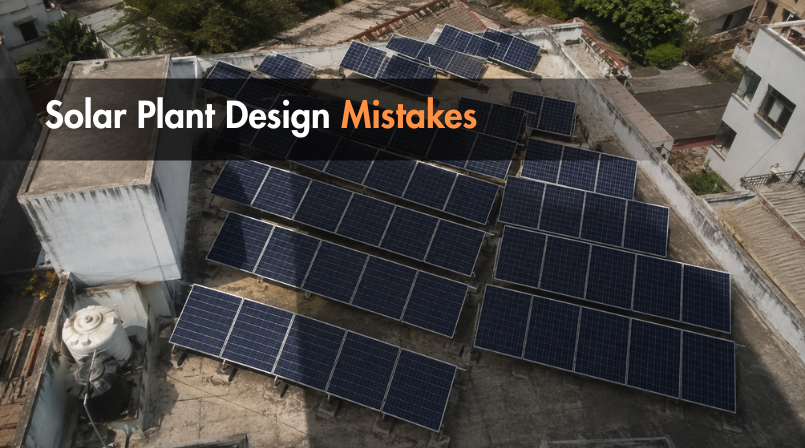
A solar plant's real performance is decided long before installation at the design stage. Two systems with identical panel wattage and inverter capacity can generate meaningfully different output over their lifetime, purely based on design decisions made on paper. Most underperforming plants aren't failing because of bad equipment; they're failing because of avoidable design mistakes.
Undersizing or Oversizing the Inverter
Matching inverter capacity exactly to panel wattage is one of the most common errors. A slightly oversized PV array relative to the inverter typically a 1.1 to 1.3 DC/AC ratio usually improves annual output, since panels rarely produce their full rated wattage simultaneously. Go too far in either direction, though, and the system either clips output on the sunniest days or leaves inverter capacity permanently unused. Getting this ratio right depends heavily on choosing the right inverter platform from the start ranges like Solis and Sineng span enough capacity points that sizing doesn't have to force a compromise.
Ignoring Shading at the Design Stage
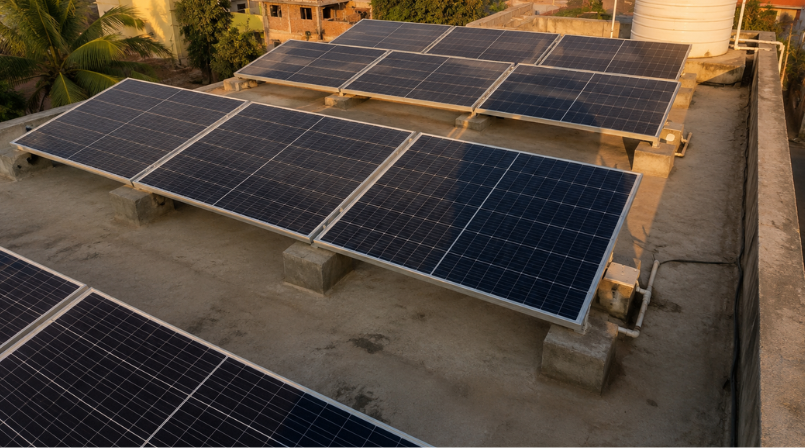
Shading from a neighboring building, water tank, or even a future tree isn't always visible during a site visit at midday, but it can knock out a meaningful share of annual production if it isn't modeled across all seasons. String inverter systems are especially sensitive here, since shading on one panel in a string can drag down the whole string's output. Where roofs have genuine shading complexity or split orientations, module-level solutions like Jio Sparq microinverters isolate the impact to the affected panel instead of the whole array.
Getting Tilt and Orientation Wrong
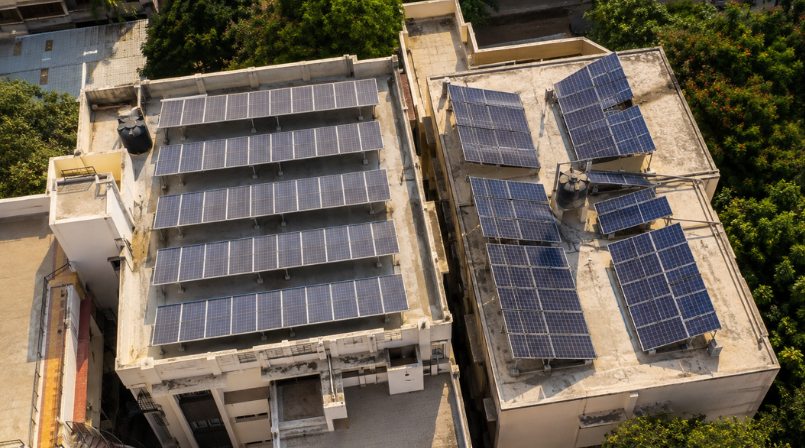
Default tilt angles copied from a template rather than calculated for the actual site latitude are a common source of underperformance. So is defaulting to south-facing orientation on every roof regardless of layout an east-west split array can sometimes outperform a poorly-shaded south-facing one, particularly where roof space is constrained. Orientation decisions should follow actual roof geometry and shading analysis, not a standard assumption applied to every project.
Undersized or Poor-Quality DC Cabling
Cable sizing gets treated as an afterthought far too often. Undersized DC cable runs cause voltage drop that silently reduces output long before any fault ever shows up on a monitoring dashboard, and cable not rated for outdoor UV and heat exposure degrades faster than the rest of the system. Purpose-built APAR solar cables are designed specifically for PV duty, which avoids the connector and insulation failures that account for a large share of avoidable service calls over a system's life.
Overlooking Module Quality and Degradation Rates
Choosing panels purely on upfront cost per watt, without checking degradation rate and certified performance warranty, tends to cost more over 20+ years than it saves at installation. A panel with a slightly higher price but a meaningfully lower annual degradation rate like certified modules from LONGi and Goldi Solar usually outperforms the cheaper option well within the system's lifetime.
Poor Inverter Placement and Ventilation
Inverters mounted in direct sun without airflow clearance, or tucked into an unventilated utility room, hit thermal derating far more often than one installed with basic shade and clearance considered at the design stage. This is a design decision, not an installation afterthought the mounting location should be planned alongside the electrical layout, not decided on-site by whichever wall has an open spot.
Skipping Local Grid Compliance Checks
Sanctioned load limits, phase requirements, and export restrictions vary by DISCOM and change over time. A design finalized without confirming these details against current local rules risks a costly redesign at the net-metering approval stage a step that should happen before equipment is finalized, not after.
Designing Without a Monitoring Plan
A plant with no monitoring, or monitoring bolted on as an afterthought, makes underperformance invisible until a bill looks unusually high months later. Building monitoring into the design from the start string-level visibility for string inverters, panel-level for microinverters means issues get caught in days, not billing cycles.
Getting the Design Right the First Time
Every mistake above is avoidable with a proper site audit and equipment selection matched to the site's actual conditions, not a generic template. Working with an established distributor across the full equipment stack modules, inverters, and cables also means design decisions are backed by consistent technical guidance rather than assumptions stitched together from different vendors.
Talk to OSG Oriana India about designing your solar plant right the first time →
FAQs
1. What's the most common solar design mistake?
Sizing the inverter exactly to panel wattage without accounting for real-world derating, which usually leaves output lower than it should be.
2. Does shading really matter if it's only for part of the day?
Yes, especially on string inverters, where shading on one panel can reduce output across the entire string it's connected to.
3. Why does DC cable quality affect system performance?
Undersized or poor-quality cable causes voltage drop that silently reduces output long before any fault appears on monitoring.
4. Is the cheapest panel always the worst long-term choice?
Not always, but panels without a certified degradation rate and performance warranty often cost more over 20+ years than a slightly pricier certified option.
5. Can a solar plant be redesigned after installation if issues show up?
Some issues can be corrected, but many design mistakes are far cheaper to fix on paper than after equipment is installed.
Found this useful? Share it with your network.