Solis On-Grid Inverters
Solis Three Phase Grid-Tied Inverter: Solis-(215-255)K-EHV-5G
On this page
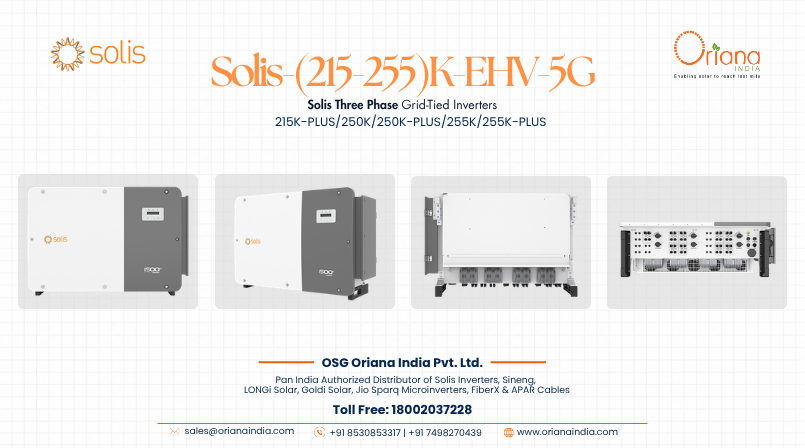
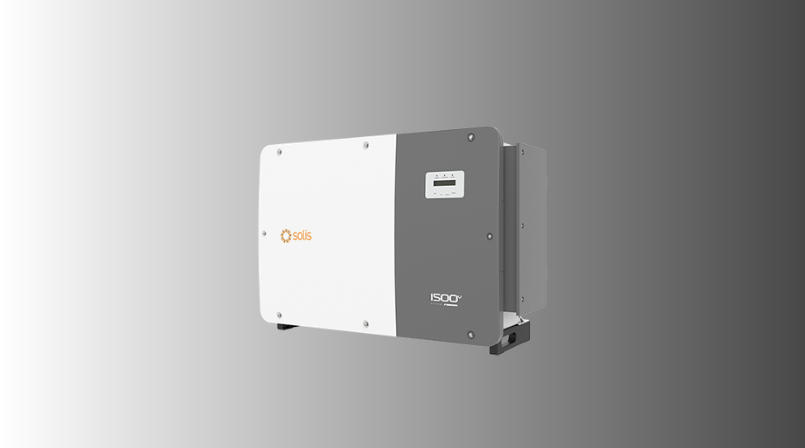
Everything below this tier in Solis's on-grid range runs on standard grid voltages, 400V, 415V, sometimes 480V on the HV variants. The Solis-(215-255)K-EHV-5G steps into genuinely different territory: an 800V grid connection, purpose-built for the largest utility-scale plants where cabling losses and step-up transformer stages actually start to matter at scale.
Why Extra High Voltage (EHV) Changes the Design
Running at a rated grid voltage of 800V, rather than the 400-480V range common across smaller commercial inverters, isn't a marketing distinction, it's a real engineering choice that reduces current for the same power output, which in turn cuts cabling losses and copper requirements across a large plant layout. For utility-scale ground-mount projects where cable runs between inverter and substation stretch across hundreds of meters, that difference compounds into real efficiency and cost savings that smaller-scale commercial projects never encounter.
Paired with a max input voltage of 1500V and MPPT voltage range up to 1500V, the EHV series is built to sit closer to the substation interconnection point in a large plant's electrical architecture, rather than requiring an intermediate step-up stage the way lower-voltage inverters typically do.
Fuse-Free by Design
One detail on this datasheet is worth calling out specifically: the series uses a fuse-free design, described as safe and maintenance-free. Fuses are a common wear-and-replacement point on large inverter installations, removing that failure mode outright reduces both the maintenance burden and the number of components that can fail across a plant running hundreds of these units. Combined with intelligent redundant fan-cooling, that's two separate design choices aimed squarely at minimizing unplanned service visits on a site where every visit has real logistics cost.
Specifications
Spec | Detail |
|---|---|
Max. efficiency | 99.0% |
MPPT / max. strings | 9-14 / 18-28 (by model) |
Max. input voltage | 1500 V |
Rated grid voltage | 3/PE, 800 V |
Max power tracking density | 56 MPPT/MW |
Module compatibility | 500W+ bifacial modules |
Ingress protection | IP66 |
Cooling | Intelligent redundant fan-cooling |
Weight | 109 kg / 113 kg |
Noise emission | ≤65 dB(A) |
Grid standards | EN50549, G99, IEC61727, VDE4110, CEA 2019 |
Five Models, One Question: Which Fits Your Plant
The series ships as 215K-PLUS, 250K, 250K-PLUS, 255K, and 255K-PLUS, with output power scaling from 215kVA up to 255kVA and MPPT count varying from 9 to 14 depending on the model. The "PLUS" variants generally carry a different MPPT and string configuration than their standard counterparts at the same power rating, worth confirming against your specific string layout and module count with your EPC before finalizing a model, since two units rated at similar output power aren't necessarily interchangeable on the DC side.
Solis On-Grid Pricing and Availability
Pricing for the Solis-(215-255)K-EHV-5G depends on the model and project scope, so it isn't published here. Contact our team for a current quote, or view the full datasheet for the complete technical specification sheet.
Browse the rest of the Solis on-grid inverter range for other capacities. OSG Oriana India Pvt Ltd is the authorized PAN India distributor for Solis on-grid inverters, with genuine manufacturer warranty support across the full lineup.
Related reading:
FAQs
1. What does EHV mean on this inverter?
Extra High Voltage, referring to its 800V rated grid connection, significantly higher than the 400-480V range used on Solis's smaller commercial and industrial inverters.
2. What capacity does the Solis-(215-255)K-EHV-5G cover?
215kVA to 255kVA, across five models: 215K-PLUS, 250K, 250K-PLUS, 255K, and 255K-PLUS.
3. Why does the 800V grid connection matter?
Higher voltage reduces current for the same power output, cutting cabling losses and copper requirements across large plant layouts where cable runs can stretch hundreds of meters.
4. What does "fuse-free design" mean for maintenance?
It removes a common wear-and-replacement component from the unit entirely, reducing both maintenance visits and potential failure points across a large plant.
5. Where can I get pricing for this inverter?
Pricing isn't published online since it varies by model and project. Contact our team for a current quote.
Found this useful? Share it with your network.